SIBYLS scientists have recently published and made available tools for generating SAXS structural comparison maps. Details of the methods have been published in Nature Methods.

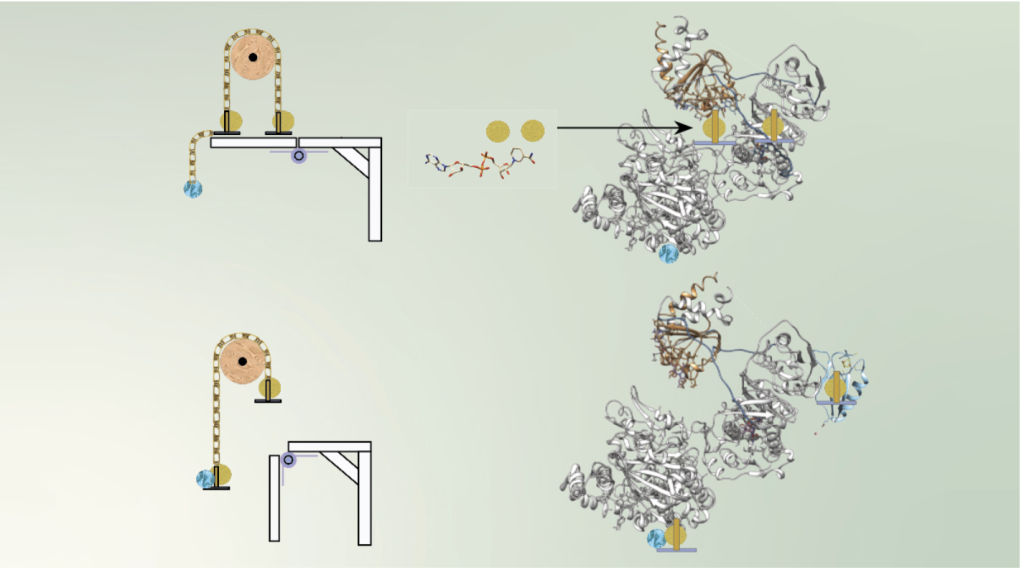
Biological macromolecular functions require distinct conformational states that are challenging to examine comprehensively. Current methods to quantify conformational similarities and distinguish different assembly states are underdeveloped. Recent developments in small-angle X-ray scattering (SAXS) have shown that SAXS can provide the resolution to resolve conformational states, characterize flexible macromolecules and screen in high throughput under most solution conditions1. However, robust tools for comprehensively characterizing and visualizing the different conformational states identified by SAXS have been lacking. Here we present the SAXS structural comparison map (SCM) and volatility of ratio (VR) difference metric, which together provide quantitative and superposition-independent evaluation of solution-state conformations.

read more in the full article…

Hura GL, Budworth H, Dyer KN, Rambo RP, Hammel M, McMurray CT, Tainer JA. “Comprehensive macromolecular conformations mapped by quantitative SAXS analyses.“Nat Methods.(28 April 2013)

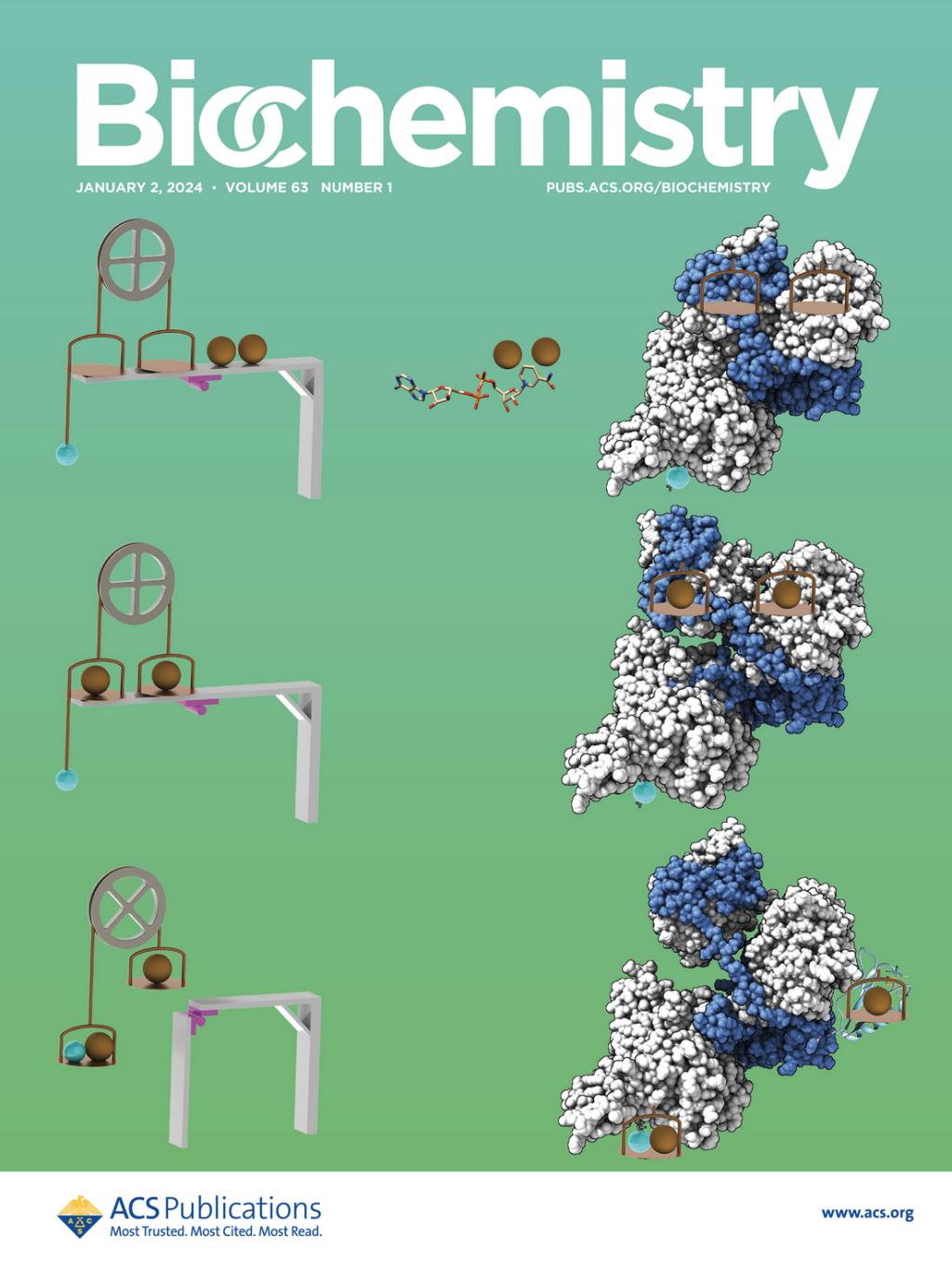
Rob and John have a new review on SAXS and its application to systems biology published in the Annual Review of Biophysics. See if you can spot the musical theme.

Small-angle X-ray scattering (SAXS) is a robust technique for the comprehensive structural characterizations of biological macromolecular complexes in solution. Here, we present a coherent synthesis of SAXS theory and experiment with a focus on analytical tools for accurate, objective, and high-throughput investigations. Perceived SAXS limitations are considered in light of its origins, and we present current methods that extend SAXS data analysis to the super-resolution regime. In particular, we discuss hybrid structural methods, illustrating the role of SAXS in structure refinement with NMR and ensemble refinement with single-molecule FRET. High-throughput genomics and proteomics are far outpacing macromolecular structure determinations, creating information gaps between the plethora of newly identified genes, known structures, and the structure-function relationship in the underlying biological networks. SAXS can bridge these information gaps by providing a reliable, high-throughput structural characterization of macromolecular complexes under physiological conditions.

QRB_rambo_fig1.png

Rambo, R.P., Tainer, J.A. “Super-Resolution in Solution X-Ray Scattering and Its Applications to Structural Systems Biology” Annual Review of Biophysics 42, 415-441 (May 2013)

Rob Rambo and John Tainer describe new SAS metrics in a paper titled “Accurate assessment of mass, models and resolution by small-angle scattering.” The paper has been published in the journal Nature.

“In SAS imaging, beams of X-rays or neutrons sent through a sample produce tiny collisions between the X-rays or neutrons and nano- or subnano-sized particles within the sample. How these collisions scatter are unique for each particle and can be measured to determine the particle’s shape and size. The analytic metrics developed by Rambo and Tainer are predicated on the discovery by Rambo of an SAS invariant, meaning its value does not change no matter how or where the measurement was performed. This invariant has been dubbed the “volume-of-correlation” and its value is derived from the scattered intensities of X-rays or neutrons that are specific to the structural states of particles, yet are independent of their concentrations and compositions.”

Rambo, R.P., Tainer, J.A. “Accurate assessment of mass, models and resolution by small-angle scattering” Nature 496, 477-481 (25 April 2013)

nature12070-f2.2.jpg

MW, molecular mass. Vc and Rg were determined from theoretical atomic X-ray scattering profiles for 9,446 protein PDB structures. For each profile, SAXS data were simulated to a maximum q = 0.5 Å−1 (~13 Å). Various ratios of Vc and Rg against protein mass were examined in a log-log plot. The linear relationship observed for the ratio Vc2Rg−1 (black) suggests that a power-law relationship exists between the ratio and particle mass of the form ratio = c(mass)k. The ratio, Vc2Rg−1, is defined by units of Å3 with mass in Daltons. Additional ratios examined (green, cyan, grey and red) displayed asymmetric nonlinear relationships.

A manuscript highlighting the technical capabilities of the SIBYLS beamline has been published in the Journal of Applied Crystallography:

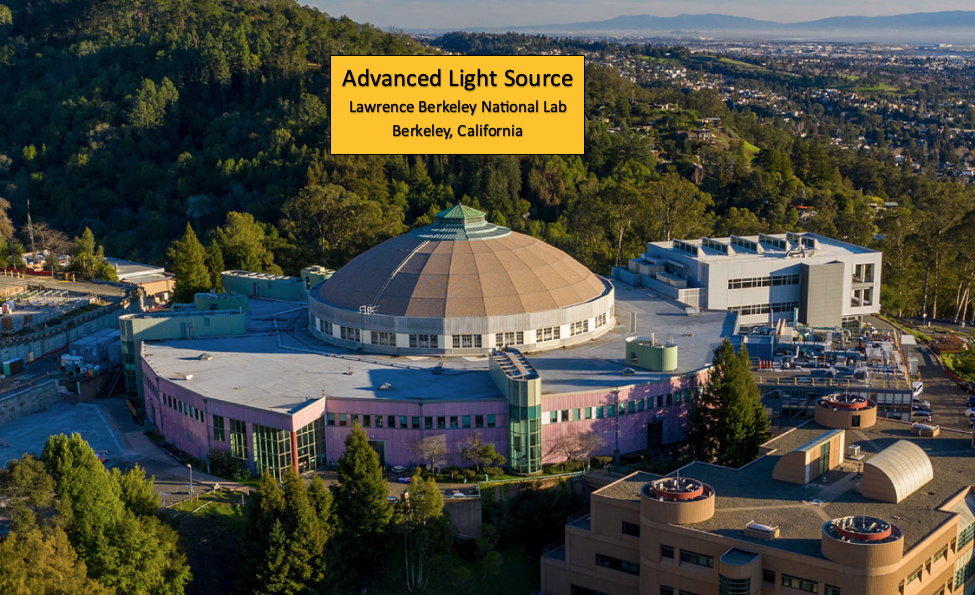
The SIBYLS beamline (12.3.1) of the Advanced Light Source at Lawrence Berkeley National Laboratory, supported by the US Department of Energy and the National Institutes of Health, is optimized for both small-angle X-ray scattering (SAXS) and macromolecular crystallography (MX), making it unique among the world’s mostly SAXS or MX dedicated beamlines. Since SIBYLS was commissioned, assessments of the limitations and advantages of a combined SAXS and MX beamline have suggested new strategies for integration and optimal data collection methods and have led to additional hardware and software enhancements. Features described include a dual mode monochromator [containing both Si(111) crystals and Mo/B4C multilayer elements], rapid beamline optics conversion between SAXS and MX modes, active beam stabilization, sample-loading robotics, and mail-in and remote data collection. These features allow users to gain valuable insights from both dynamic solution scattering and high-resolution atomic diffraction experiments performed at a single synchrotron beamline. Key practical issues considered for data collection and analysis include radiation damage, structural ensembles, alternative conformers and flexibility. SIBYLS develops and applies efficient combined MX and SAXS methods that deliver high-impact results by providing robust cost-effective routes to connect structures to biology and by performing experiments that aid beamline designs for next generation light sources.

side_cad_sm.jpg

Classen, S, Hura, GL, Holton, JM, Rambo, RP, Rodic, I, McGuire, PJ, Dyer, K, Hammel, M, Meigs, G, Frankel, KA, and Tainer, JA “Implementation and performance of SIBYLS: a dual endstation small-angle X-ray scattering and macromolecular crystallography beamline at the Advanced Light Source.” (2013). J Appl Crystallogr 46, 1-13.

A recent IDAT publication from James, Chris, and Ken investigating the source of the point spread function in detectors using CCDs coupled fiber optic tapers.

The point-spread function (PSF) of a fiber-optic taper-coupled CCD area detector was measured over five decades of intensity using a 20 µm X-ray beam and 2000-fold averaging. The “tails” of the PSF clearly revealed that it is neither Gaussian nor Lorentzian, but instead resembles the solid angle subtended by a pixel at a point source of light held a small distance (27 µm) above the pixel plane. This converges to an inverse cube law far from the beam impact point. Further analysis revealed that the tails are dominated by the fiber-optic taper, with negligible contribution from the phosphor, suggesting that the PSF of all fiber-coupled CCD-type detectors is best described as a Moffat function.

the authors go on to suggest that:

…we expect that by fitting an expression for the spot-PSF convolution as described here directly to pixel values will result in more accurate spot intensity integrals than those currently being obtained using conventional profile-fitting methods (which assume that the intensity of a pixel is due exclusively to X-ray photons falling directly upon it). A “fitting approach” would eliminate systematic errors in background estimation arising from the tails and also suppress the influence of shot noise from X-ray photons falling on pixels outside the “true” spot area.

Holton, J. M., Nielsen, C. and Frankel, K. A.”The point-spread function of fiber-coupled area detectors” Journal of Synchrotron Radiation, 19, 6, (Nov, 2012)

Keeping DOMO happy

|

Hello DOMO users,

DOMO is fairly robust, and is capable of handling your precious crystals mounted in a variety of bases:

pin-types.jpg

However, you must take some care when gluing or epoxying the pins into the bases. If there is too much glue or epoxy or you inadvertantly get some on the sides or bottom of the base this will cause the robot to jam, which will require time-wasting reset procedures, lost samples, and unhappy beamline support personnel.

Here is a recent example of several pins where the user (who will remain unnamed) applied entirely too much epoxy. Somehow the user was able to load these pins into the cassette, but they caused the robot to jam.

bad_pins_for_DOMO.jpg

There are more detailed tips and hints on the SSRL SMB website for preparing your bases and pins.

Summary of Options for Applying for Beamtime at the ALS

  1. RAPIDD - a rapid access process, replaces the 2-month proposal system. SAXS proposals should use the RAPIDD system. MX applicants may apply for either RAPIDD or 6 Month Proposals.

    The aim is to provide quick turnaround. Proposals are fairly simple, requiring a one page pdf describing the science, and will be accepted at any time. Proposals are sent out for review within two business days, and we hope to complete the review within 2-3 weeks. Beamtime may be allocated at any time after submission depending on your proposal score, the number of proposals submitted, and the beamtime available. We have never rejected a RAPIDD application for SAXS data collection except for applications proposing technically impossible experiments nto suited to the SIBYLS beamline.

  2. 6 MONTH PROPOSAL

    This mechanism will suit regular long-term users of the ALS. It has been available since January 2012 and 14 research groups successfully established a 2-year research program in the first cycle. The mechanism allows users to apply for a longer term program through the regular ALS proposal cycle. Proposals are accepted every 6 months, for beamtime starting 4 months later. These proposals may be renewed for subsequent 6 month cycles for up to 2 years. Proposals may cover a broad program of work, and will be submitted as a PDF file, up to 3 pages long. We hope this will reduce the overall workload for users who currently submit more than one proposal a year.

ALS Ring Status

loading ...
als current sparkline

Funding

Photos

  • QRB_rambo_fig1.png
  • nature12070-f2.2.jpg
  • side_cad_sm.jpg
  • NBS1.gif
  • MRE11Rad50.jpg
  • Mre11Rad50.gif
  • bad_pins_for_DOMO.jpg
  • pin-types.jpg
  • dimer.png
  • loops_structure.png

Archives

Powered by Movable Type 5.2.3

May 2013

Sun Mon Tue Wed Thu Fri Sat
      1 2 3 4
5 6 7 8 9 10 11
12 13 14 15 16 17 18
19 20 21 22 23 24 25
26 27 28 29 30 31